
Travel-related scams are becoming increasingly sophisticated, with scammers using fake airline contacts, phishing emails, and fraudulent booking services to target travelers. Recent real-life cases highlight the importance of verifying unexpected travel communications before providing payment or personal information.
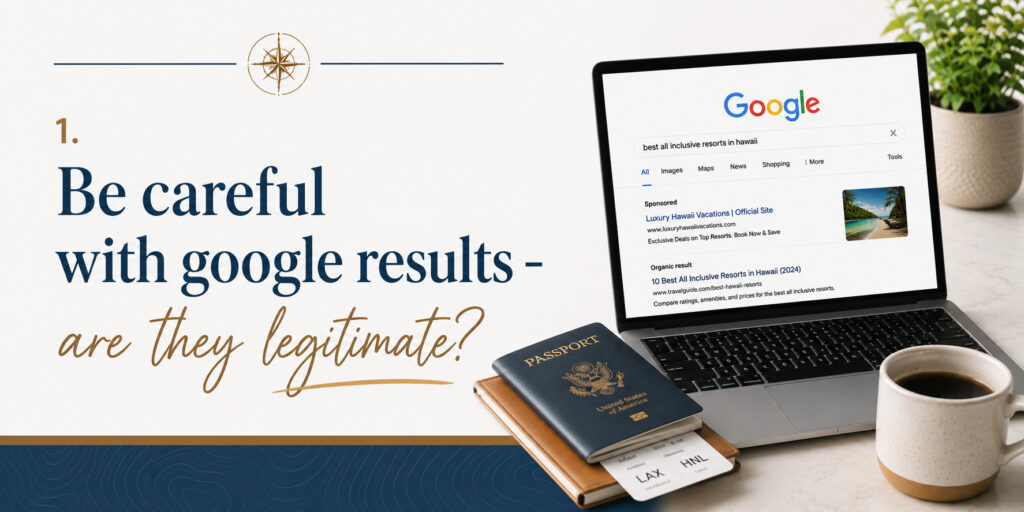
A traveler needed to make a name change on her airline reservation before check-in. Instead of contacting her travel advisor, she searched Google for the airline’s phone number and unknowingly reached scammers through a sponsored listing. The fraudsters accessed the booking, completed the change, charged her $815 USD, and falsely instructed her not to contact her advisor.
In reality, the airline confirmed they do not charge for minor name corrections and never bill in USD for these services. The red flags were there but missed by this unsuspecting client.
This scam highlights how convincing fraudulent third-party “reservation services” can appear online.
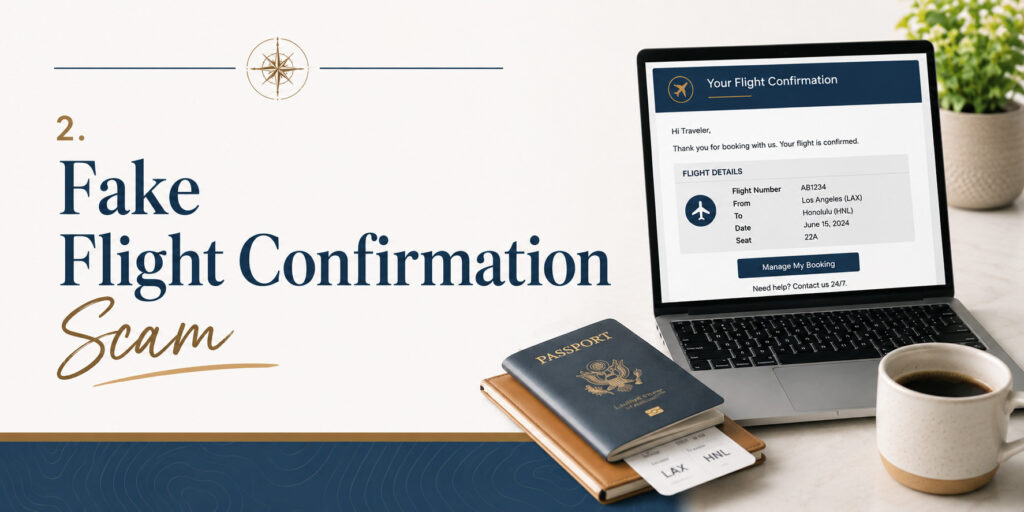
A long-time traveler received a notification saying her flights were waitlisted and unknowingly contacted a fraudulent third-party agency after searching online for an airline phone number. Believing immediate payment was required to confirm her seats, and worried about her upcoming trip, she provided her credit card information and paid approximately $14,000 to what she believed was an airline-related service.
It was later discovered that no changes had ever been made to the actual airline reservation, highlighting how scammers use urgency and fake airline support services to deceive travelers.
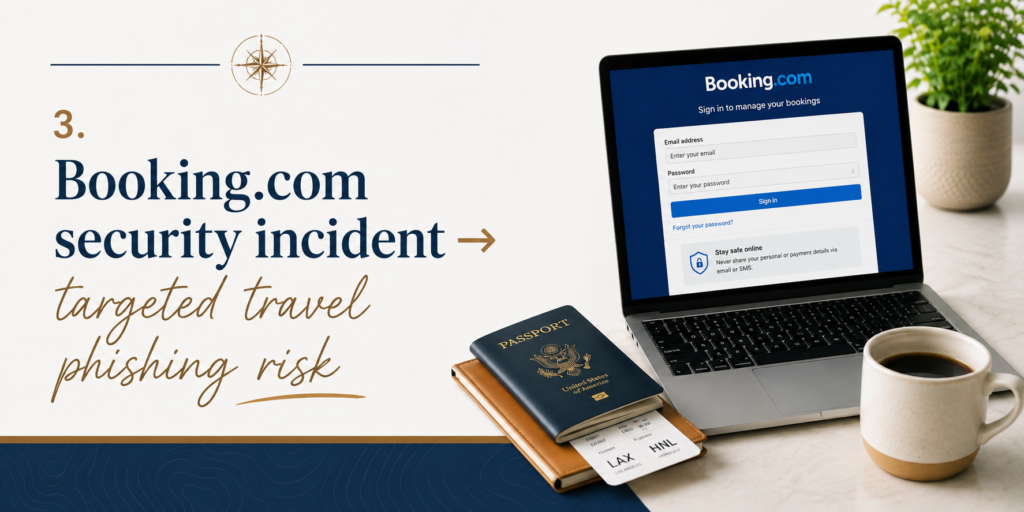
A recent Booking.com data breach has led to a rise in sophisticated travel phishing scams targeting travelers with active reservations. Using leaked booking details, scammers are sending highly convincing messages that include real hotel names, travel dates, and reservation information while impersonating Booking.com or hotel staff.
Many travelers are being pressured to provide payment details or complete “urgent verification” requests, making the messages appear legitimate. Because the information used is real, these scams can be extremely difficult to distinguish from genuine travel communications.
Clients should always verify they are contacting the airline or supplier directly through official websites or through their travel advisor before providing payment or booking details.
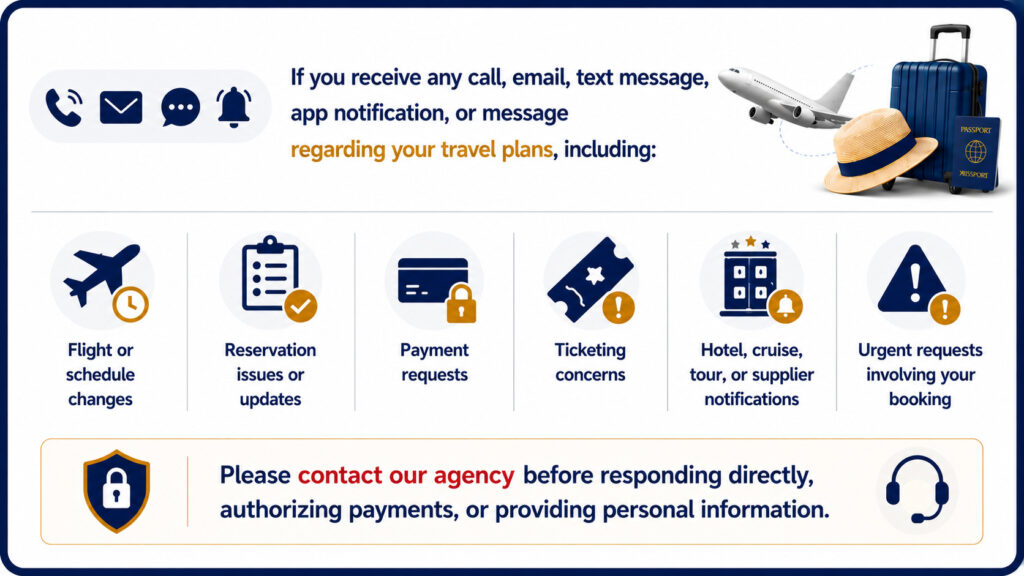
Fraudulent emails, fake booking websites, misleading phone calls, and unofficial online search results are becoming increasingly common in the travel industry. Scammers often impersonate airlines, hotels, cruise lines, tour operators, or other travel suppliers to create a sense of urgency and convince travelers to provide personal information, payment details, or booking access. Clients should always exercise caution and verify unexpected travel-related communications with their travel advisor before taking action.
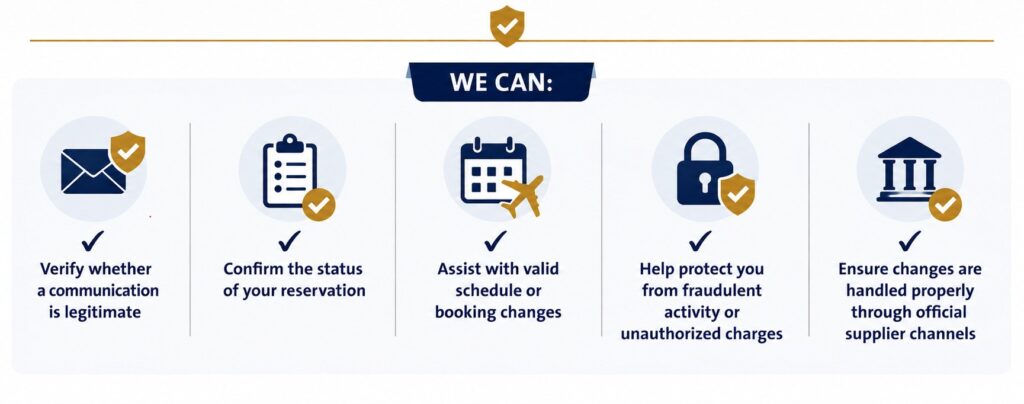
As your travel advisor, we are here to help verify and manage your travel arrangements safely and correctly.
If you believe you’ve been scammed online — especially involving travel bookings, airline tickets, or fraudulent payment requests — you should act immediately to limit financial loss and protect your personal information.
- Contact your credit card company or bank immediately to report the fraudulent transaction. Ask to dispute the charge, freeze or replace the card if necessary, and monitor for additional unauthorized activity. Acting quickly greatly improves the chances of recovering funds.
- Notify the travel advisor, airline, cruise line, or supplier directly to verify whether any unauthorized changes were made to the booking. Suppliers can often place notes on the reservation, secure the file, or identify suspicious activity.
- Change passwords for any accounts that may have been shared or compromised, especially email accounts, airline loyalty programs, travel accounts, and online banking. Enable two-factor authentication wherever possible.
- Report the scam to the appropriate fraud reporting agencies. In Canada, consumers can report incidents to the Canadian Anti-Fraud Centre.
- Keep records of all communications and receipts, including screenshots, phone numbers, emails, invoices, and payment confirmations. This documentation can help with charge disputes, investigations, and insurance claims.
- Be cautious of follow-up scams. Fraudsters sometimes contact victims again pretending to offer refunds or recovery services in exchange for additional payments or personal information.
Be careful when planning travel through online providers!
Not everyone you encounter online is legit.


